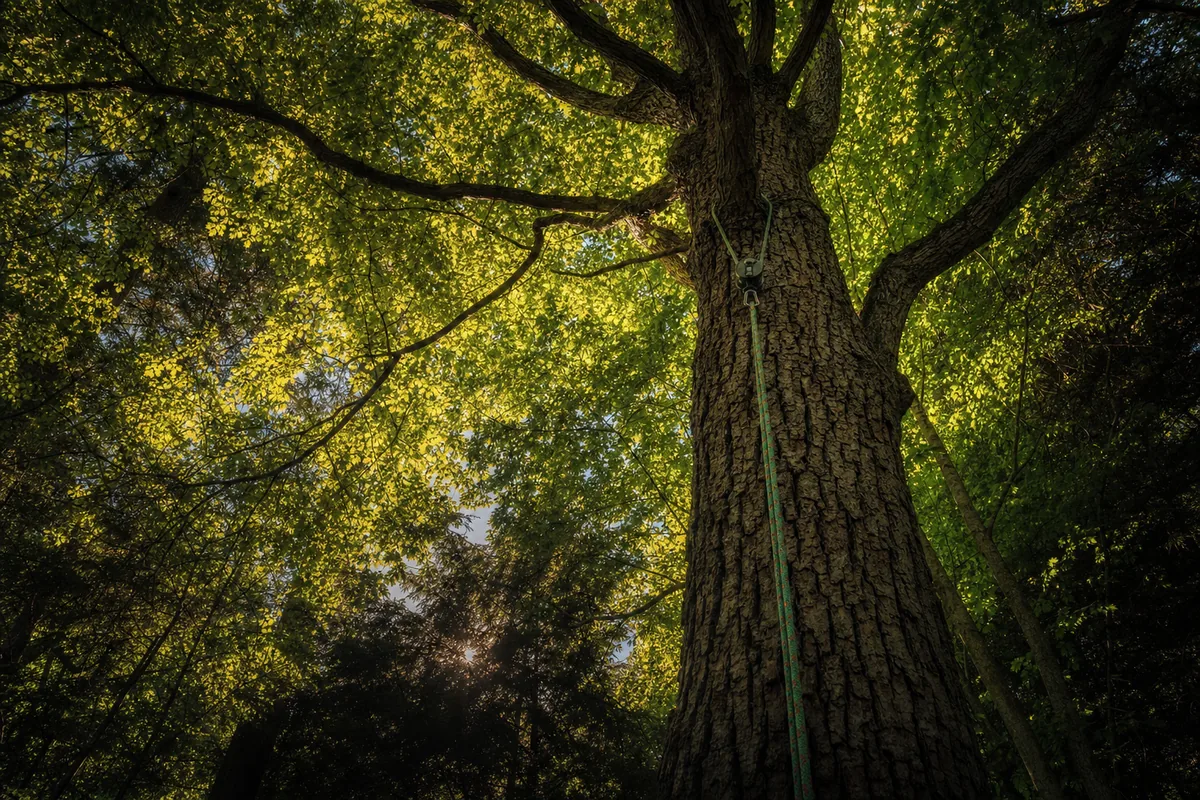
A large tree is not the same as a dangerous one.
Certified arborists, published price bands, and an honest assessment of whether the tree needs anything doing at all. Most of the ones we are called to are fine.
- Arboricultural qualification
- Level 4 Dip.Arb
- Chainsaw & aerial rescue
- Certified, in date
- Public liability
- $5M
- Employer's liability
- $10M
What an arborist actually looks at.
Two of these six are genuinely urgent, three are worth a look, and one is not a problem at all. Publishing this costs us the jobs where nothing needed doing, which is rather the point.
Fungal brackets on the trunk
highBrackets are the fruiting body of decay that is already well advanced inside the stem. By the time they appear, a significant proportion of structural wood is usually gone.
A crack or split at a fork
highIncluded bark unions — where two stems grow tightly together with bark trapped between them — fail suddenly and often in still weather rather than storms.
Deadwood above something you value
mediumDeadwood in the crown is normal on mature trees. It only matters when there is a target underneath: a patio, a path, a parking space, a neighbour's conservatory.
Recent change in lean
highA tree that has always leaned is usually fine. One that has moved recently, with soil cracked or heaved on the opposite side, is a different matter entirely.
Thinning crown, small leaves
mediumUsually stress rather than structural danger — drought, root damage from building work, or compaction. Worth assessing, rarely worth felling.
It is simply very large
lowSize is not risk. Most of the large trees we are called to assess are healthy, structurally sound and will outlive everybody reading this.
By size and access, not by guesswork.
Access moves a price more than height does. A modest tree behind a house with no side gate can cost more than a large one in an open field.
| Band | Height | Typical work | Range |
|---|---|---|---|
| SmallGarden trees, usually a single day with a chipper. | Up to 8m | Fell, or reduce and tidy | $340–620 |
| MediumMost suburban trees sit here. Access decides the top of the range. | 8–15m | Sectional dismantle or reduction | $680–1,400 |
| LargeRigging over structures. Two to three days and a larger team. | 15–22m | Rigged dismantle | $1,500–3,200 |
| ComplexWhere a machine cannot reach and the drop zone is somebody's roof. | Any, poor access | Crane or rope access | Quoted |
Your tree may be protected.
Felling or even heavily pruning a protected tree is a criminal offence carrying an unlimited fine, and the responsibility sits with the owner rather than the contractor. Plenty of people have no idea theirs is protected.
We check the register before quoting. A firm that does not is exposing you, not itself.
We check before quoting
A quick search against the local authority register. It costs us nothing and it is not optional.
Conservation areas count too
Even without a specific order, trees in a conservation area need six weeks notice before any work.
Applications are ours to make
We prepare and submit the notice with the arboricultural justification. Refusals usually come from bad paperwork.
Exemptions are narrow
Dead, dying or dangerous is a real exemption but a much smaller one than people assume, and the burden of proof sits with you afterwards.
The garden survives it too.
Ground protection
Boards over lawns and driveways before any machine moves. Rutted turf is the most common complaint in this trade and it is entirely avoidable.
Rigging over structures
Nothing is dropped where it could hit something. Lowering takes longer and is why a proper quote is higher than a man with a saw.
Everything chipped and cleared
Included as standard. Site left swept, not just cleared of the big pieces.
Logs left if you want them
Cut to length and stacked wherever you say. Say so at the quote and it costs nothing.
One is about a job we talked them out of.
“Came out, looked at it properly, and told me the tree was healthy and to leave it alone. Charged me nothing.”
E. Wexford
Assessment
“Spotted the preservation order that two other firms had not checked for. That would have been an expensive mistake.”
K. Adeyemi
Oak reduction
“Boards down over the whole lawn before the chipper came near it. You would not know they had been here.”
S. Okafor
Sectional fell
Including why we will not top a tree.
Is my tree dangerous?+
Size is not risk. The hazard signs on this page are what an arborist actually looks for — fungal brackets, included bark unions, deadwood over a target, a recent change in lean. Most large trees we are called to assess are healthy and stay exactly where they are.
Can I fell a tree in my own garden?+
Not if it carries a preservation order or stands in a conservation area, and plenty of owners have no idea theirs does. Felling a protected tree is a criminal offence carrying an unlimited fine. We check the register before quoting, every time.
Will you top my tree?+
No. Topping removes the crown indiscriminately, forces weak regrowth from the wounds, invites decay into every cut and shortens the tree's life. Crown reduction to a specification achieves what people actually want and the tree survives it.
Why is your quote higher than the man with a chainsaw?+
Rigging, ground protection, insurance and qualified climbers. A tree dropped rather than lowered is cheaper right up until it hits something, and at that point your insurer will ask who did the work and whether they were certified.
What happens to the wood?+
Chipped and taken away as standard, or cut to length and stacked if you want it. Say which at the quote — it makes no difference to the price.
Free, and sometimes the answer is nothing.
A qualified arborist looks at the tree and tells you what it needs, which is regularly less than you expected and occasionally nothing at all.